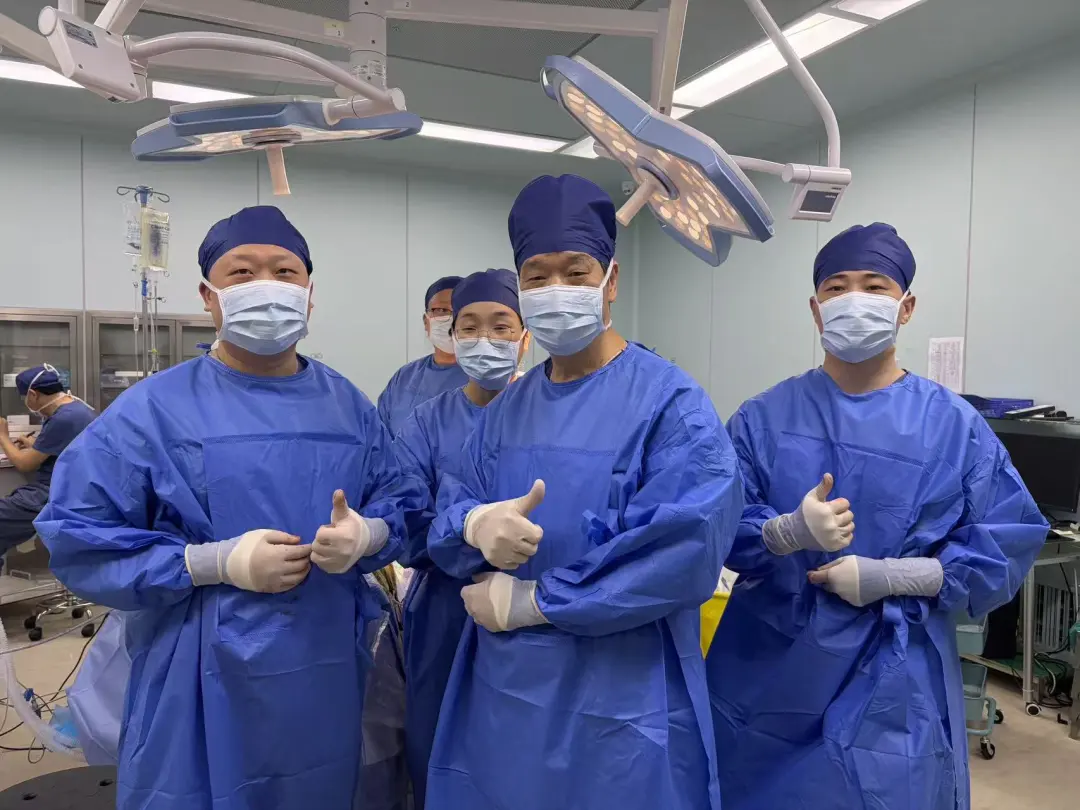
The DBS surgical team led by Prof. Hu Xiaowu after successfully completing China's first 8-contact electrode DBS implantation at Shanghai Donglei Brain Hospital.
In This Article
The Patient Story: A 15-Year Battle with Parkinson's
Mr. Qiu, a 75-year-old from Zhejiang Province, had been living with Parkinson's disease for 15 years. In the early stages, oral medications such as Madopar (levodopa/benserazide) effectively controlled his symptoms, allowing him to maintain his quality of life.
However, as the disease progressed, Mr. Qiu began experiencing a common but challenging phenomenon known as "wearing-off effect" — where medication efficacy progressively shortens while side effects intensify:
- Duration of drug effect: Reduced from 4–5 hours to just 2–3 hours per dose
- Dyskinesia: Involuntary, dance-like movements caused by long-term levodopa use
- Freezing of gait: Sudden inability to move the feet forward despite the intention to walk
"When the doctor mentioned DBS surgery as a possibility, our family felt like we saw a light at the end of a very long tunnel."
Mr. Qiu's story is representative of millions of Parkinson's patients worldwide — families who endure not only the physical burden of the disease but also the emotional toll that comes with watching a loved one gradually lose independence.
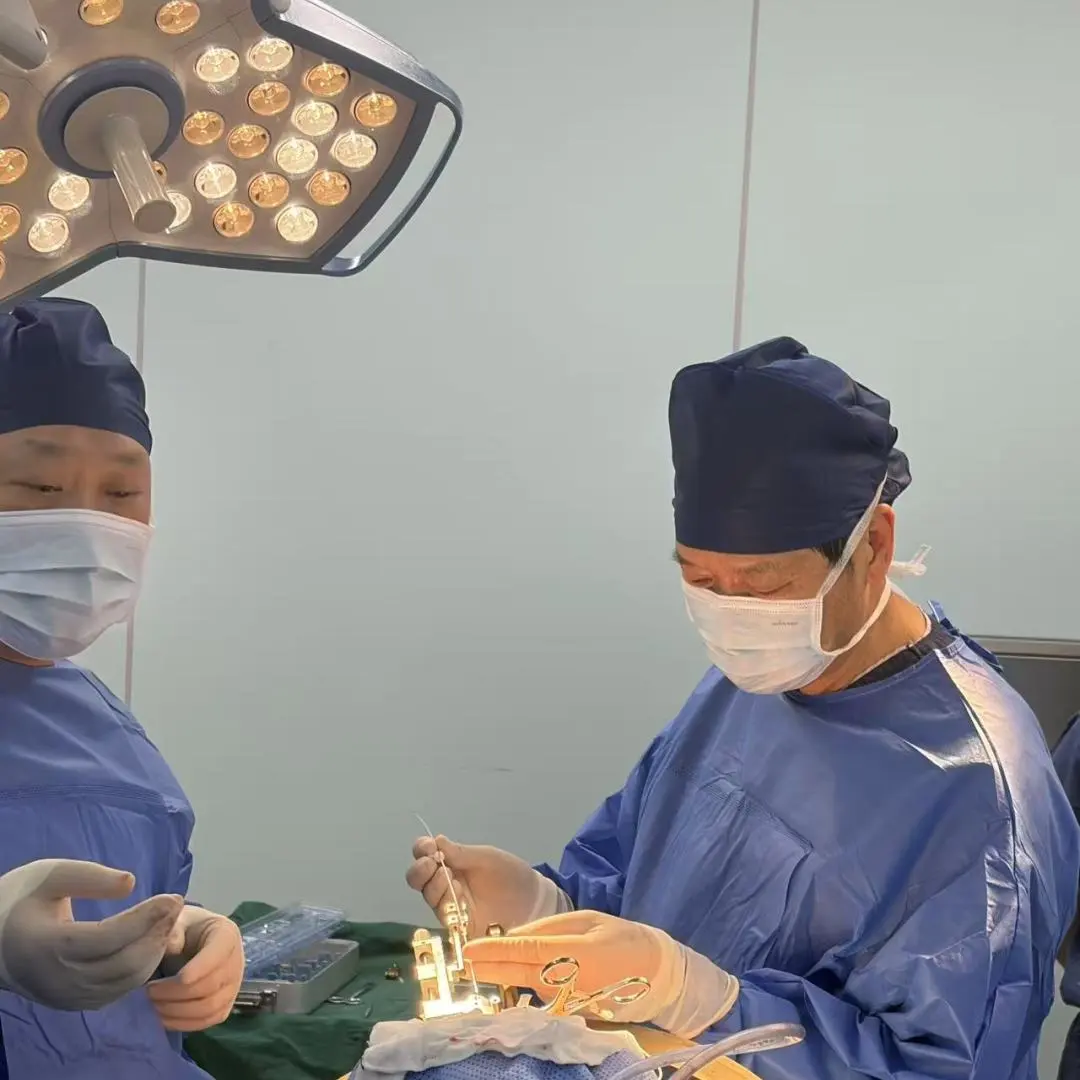
Precise intraoperative electrode placement under stereotactic guidance.
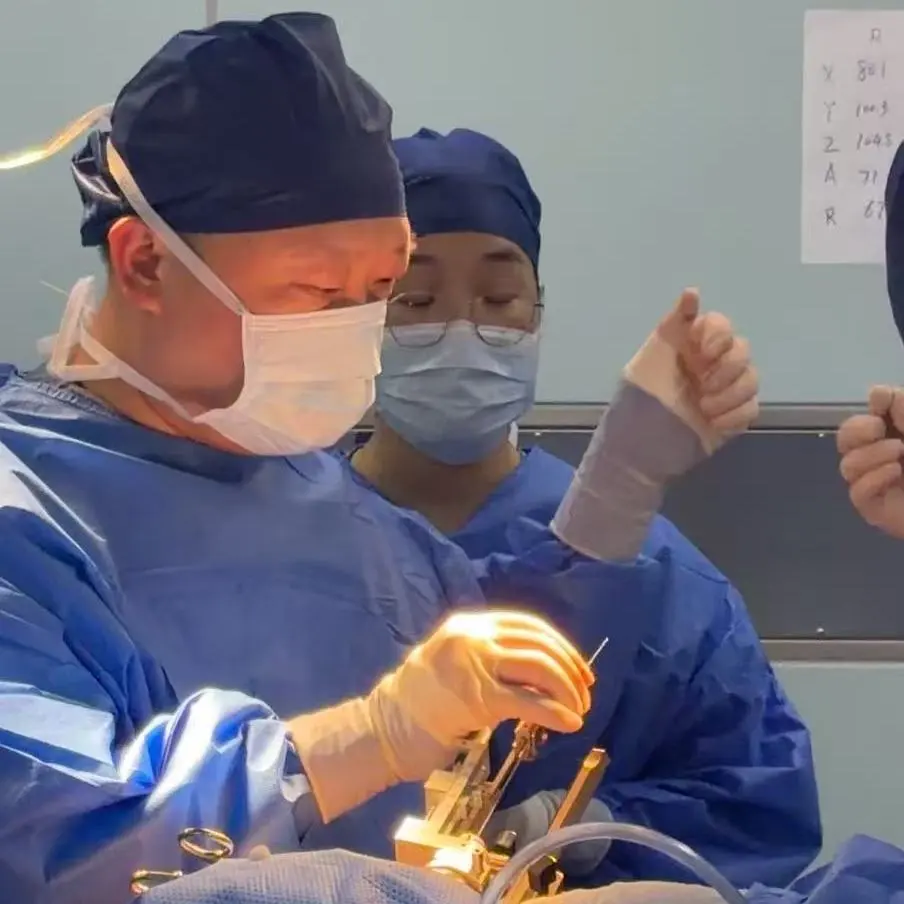
Prof. Hu Xiaowu personally directing the electrode positioning.
The 8-Contact Electrode: A Treatment Revolution
DBS surgery is far more than simply "implanting a brain pacemaker." The key lies in crafting a precisely customized stimulation protocol tailored to each patient's unique neurological profile.
💡 What Makes This Surgery Historic?
This is the first time in China that an 8-contact directional electrode has been paired with a G108R rechargeable pulse generator in a single DBS procedure. This combination opens new frontiers in treating advanced Parkinson's symptoms that were previously difficult to manage.
From Single-Circuit to Multi-Circuit Stimulation
Traditional DBS uses a 4-contact ring electrode targeting primarily the subthalamic nucleus (STN). While effective for core motor symptoms, it has limitations when patients develop complex symptoms like freezing of gait and severe dyskinesia.
🔬 Why 8 Contacts Matter
- Broader coverage: The 8-contact electrode can stimulate multiple adjacent targets simultaneously or independently
- Subthalamic nucleus (STN): Primary target for classic motor symptoms (tremor, rigidity, bradykinesia)
- Substantia nigra (SN): Adjacent structure linked to gait freezing
- Zona incerta / Fields of Forel: Regions associated with dyskinesia control
- Directional stimulation: Steering current away from side-effect-inducing areas
"Traditional 4-contact electrodes mainly target the subthalamic nucleus. But in late-stage Parkinson's, freezing of gait and dyskinesia are the two most challenging symptoms. The 8-contact electrode provides more stimulation site options — it can not only target the STN but also the adjacent substantia nigra and zona incerta, achieving multi-circuit stimulation that better improves gait freezing and controls dyskinesia."
PINS G108R: The New Benchmark in Neurostimulation
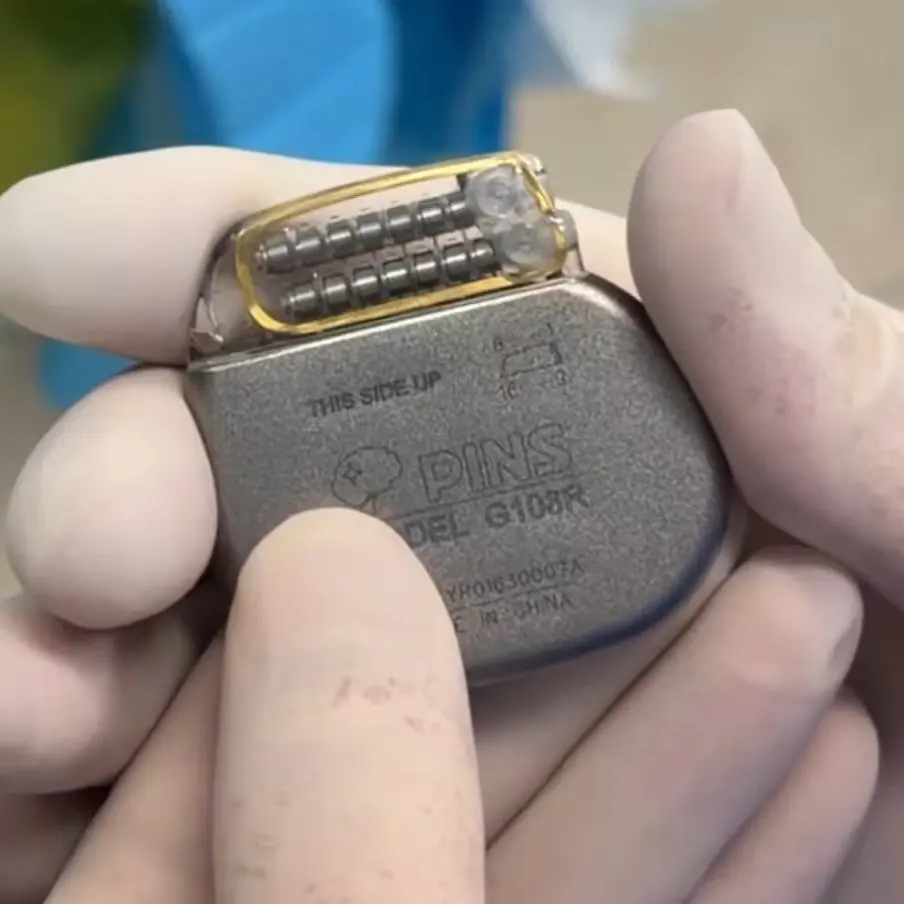
The PINS G108R rechargeable pulse generator — a Chinese-made next-generation brain pacemaker featuring ultra-thin design, fast-charging capability, and future-ready closed-loop technology.
The PINS G108R represents a new benchmark in therapeutic Brain-Computer Interface (BCI) devices. Developed by Beijing PINS Medical Co., Ltd., this device embodies years of technological innovation and is positioned as a treatment-oriented BCI pioneer.
(Ultra-Lightweight)
(~43% Thinner)
(Fast-Charge Tech)
(Future-Ready)
💡 Key Innovations of the G108R
- Ultra-Slim Design: Weighs only 25g with a body thickness of just 7.6mm — approximately 43% thinner than the previous generation, significantly improving patient comfort.
- Rapid Recharging: Features medical-grade fast-charging technology. Under typical stimulation parameters, the device requires only 20–30 minutes of charging per week for full-day operation.
- Multi-Electrode Compatibility: Supports flexible pairing with various electrode configurations, including the new 8-contact directional electrode used in this case.
- Sensing Capabilities (Closed-Loop Ready): As a sensing-enabled neurostimulator, the G108R can record local field potentials (LFPs), monitor movement data, and track sleep patterns. It has the hardware foundation for future over-the-air (OTA) upgrades to fully closed-loop stimulation.
- MRI Compatibility: Designed to be compatible with high-field magnetic resonance imaging (MRI), allowing patients who need future brain scans to do so safely.
Dr. Zeng Ran (曾冉), Director of Neuromodulation at Donglei, emphasized the clinical significance of these innovations:
"The G108R isn't just an incremental upgrade — it's a platform for the future of neuromodulation. Its sensing capabilities mean we're moving from 'open-loop' stimulation (fixed parameters set by doctors) toward true 'closed-loop' therapy where the device can adapt to the patient's brain activity in real-time."
— Dr. Zeng Ran, Director, Neuromodulation Center, Shanghai Donglei Brain Hospital
Beyond Surgery — A Complete Parkinson's Care Ecosystem
If DBS surgery is a precise medical dialogue, then Shanghai Donglei Brain Hospital's true advantage lies in its comprehensive ecosystem spanning diagnosis, surgery, rehabilitation, and lifelong management.
Multi-Disciplinary Integration
Donglei Brain Hospital brings together specialists across multiple disciplines:
🧖 Our Multi-Disciplinary Team
- Neurosurgery — Precision electrode placement and device implantation
- Neurology — Disease assessment, medication optimization, and symptom monitoring
- Rehabilitation Medicine — Post-operative physical therapy and gait training
- Sleep Medicine — Assessment and treatment of sleep disorders commonly co-occurring with Parkinson's
- Psychology / Psychiatry — Support for depression and anxiety often accompanying chronic illness
Treating the "Invisible Symptoms"
When developing treatment plans, Donglei's physicians look beyond motor symptoms to address the often-overlooked non-motor manifestations of Parkinson's disease:
"Up to 80% of Parkinson's patients suffer from constipation, which is often overlooked. Our goal is to help patients live more complete lives — not just improve a single symptom."
Continuous Innovation Across Every Step
The hospital's approach integrates cutting-edge technology at every stage of the DBS pathway:
- Stereotactic navigation planning for millimeter-level precision
- Individualized electrode selection and stimulation parameter design
- Intraoperative microelectrode recording (MER) and test stimulation
- Post-operative programming optimization through iterative adjustments
- Long-term remote management and follow-up support
The Expert Team Behind the Milestone
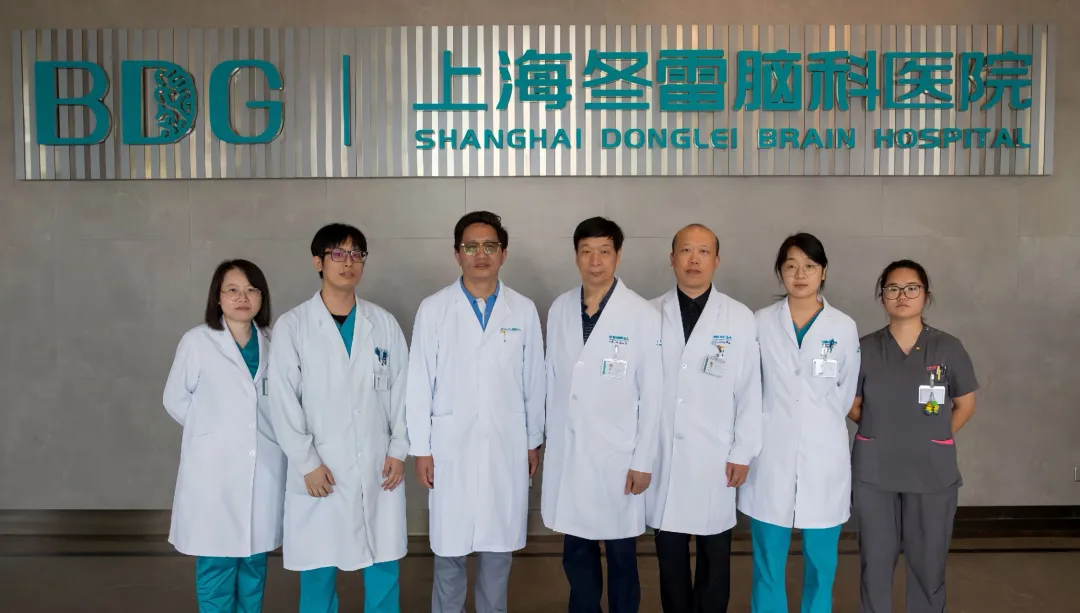
The dedicated neuromodulation and functional neurosurgery team at Shanghai Donglei Brain Hospital — combining expertise across neurosurgery, neurology, rehabilitation, and nursing care.
🏆 A Landmark Moment
This successful surgery demonstrates Shanghai Donglei Brain Hospital's commitment to pushing the boundaries of neurological care in China. By combining world-class medical talent with the latest technological innovations, the hospital continues to deliver hope to patients facing some of the most challenging neurological conditions.
For international patients seeking expert evaluation for DBS surgery, Parkinson's treatment, or other functional neurosurgical procedures, Shanghai Donglei Brain Hospital offers comprehensive consultation services with multilingual support.
Considering DBS Surgery? Let Us Help.
Our international patient team provides free preliminary consultations, treatment cost estimates, and travel coordination for overseas patients seeking DBS or other neurosurgical treatments in Shanghai.